
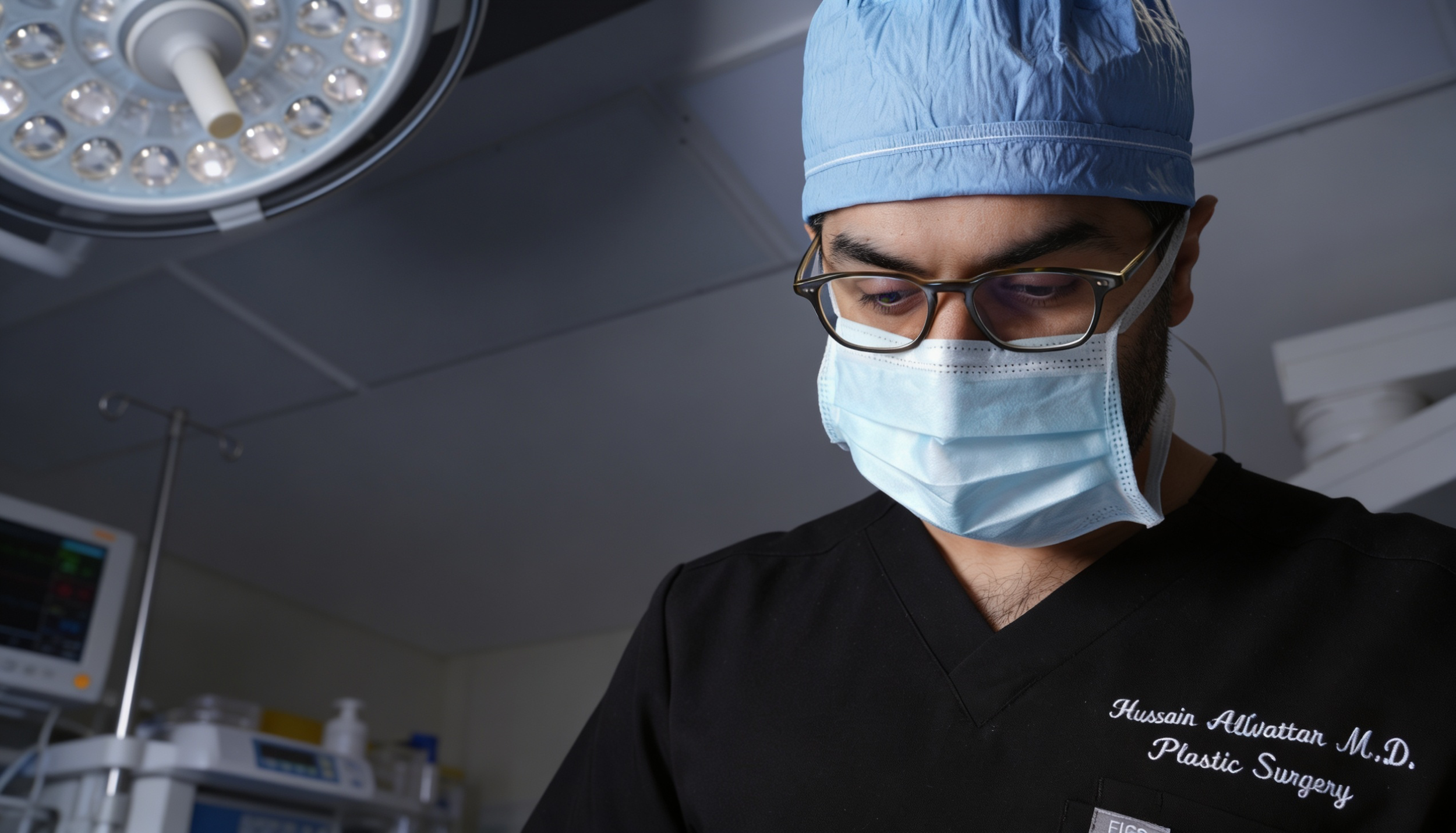
Endoscopic Deep Plane Facelift
Through small, hidden incisions, natural rejuvenation with minimal visible signs of surgery.
When you want true rejuvenation, without visible signs of surgery.
Many patients in their 30s and 40s notice that the deeper tissues of the face are beginning to descend, the cheeks settle lower, the brow becomes heavier, and the jawline starts to soften, while the skin itself is still relatively firm. Topical treatments and fillers may have offered short-term improvements but cannot address the true underlying structural changes.
The endoscopic deep plane facelift addresses these deeper layers directly, through small, well-concealed incisions, producing a refreshed, naturally rejuvenated result that is entirely your own.
The endoscopic deep plane facelift is a panfacial rejuvenation procedure performed through small, hidden incisions using endoscopic equipment, a thin camera with magnification that lets Dr. Husain reposition the deeper tissues of the face and neck with precision.
Unlike a traditional facelift, the work is done beneath the surface to elevate the structural layers that have descended over time.
The technique addresses:
The brow and forehead
The midface and cheeks
The jawline and neck
Overall facial balance and contour
The results are entirely natural and built to last.
A true deep plane facelift, through smaller incisions
Is the endoscopic deep plane facelift right for you?
This procedure is often chosen by patients who are beginning to notice deeper facial ageing but still have relatively good skin quality and wish to avoid the more extensive incisions of a traditional facelift.
• You have early descent of the cheeks or brow.
• You notice loss of jawline definition.
• You want natural rejuvenation without visible signs of surgery.
• You are looking for a long-lasting solution rather than temporary treatments.
The best way to determine whether an endoscopic deep plane facelift is right for you is through a personal consultation with Dr. Husain, where your anatomy, goals, and treatment options can be carefully evaluated.
The procedure in Dr. Husain’s hands
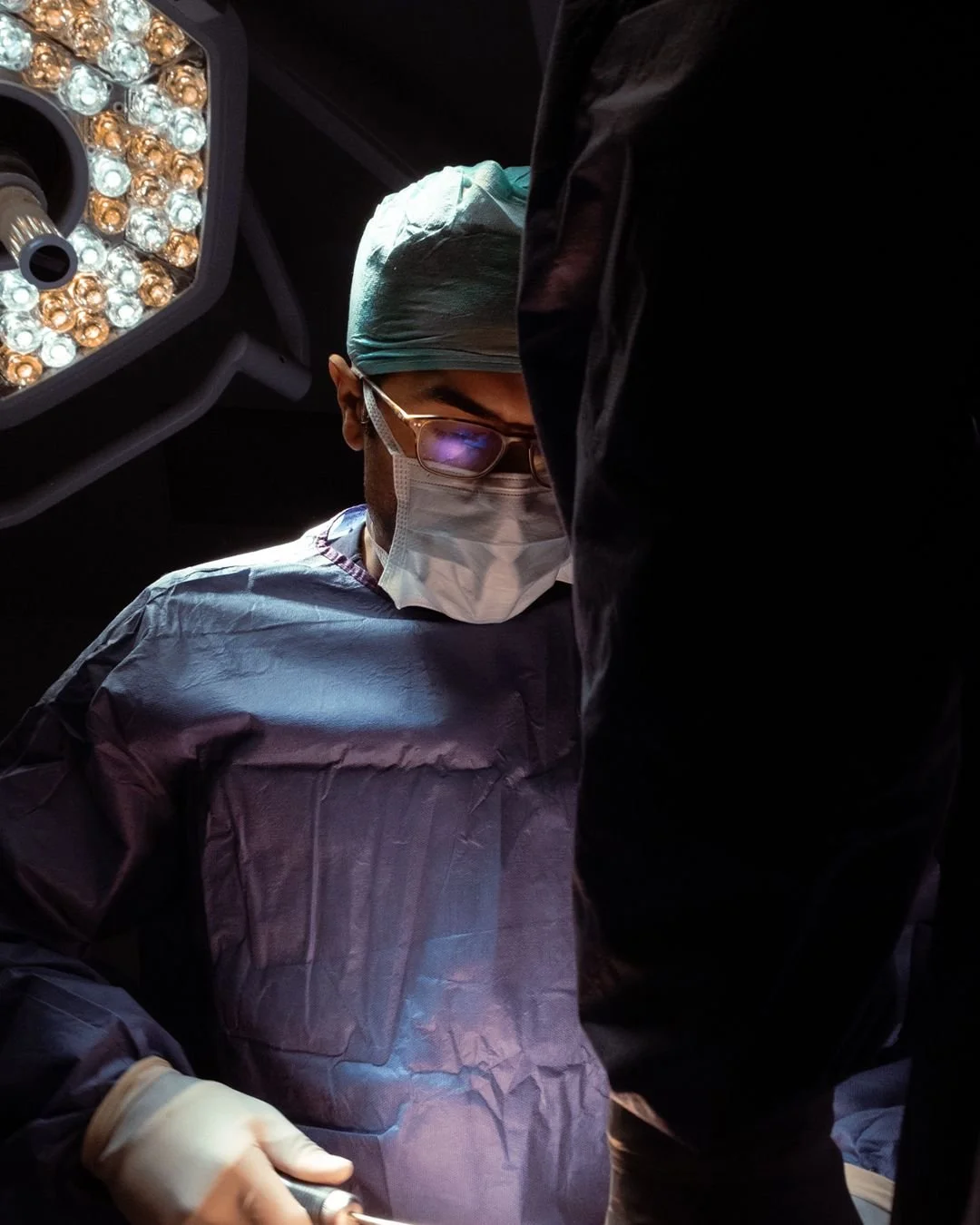
Every endoscopic deep plane facelift performed by Dr. Husain is customised to the individual. The exact surgical plan depends on facial anatomy, the degree of ageing present, and the patient’s goals.
Small incisions are hidden within the hairline and natural contours around the ears. Through these access points, the deeper tissues are carefully released and repositioned under endoscopic guidance.
For selected patients, treatment may be combined with RF microneedling to improve skin quality and further enhance overall rejuvenation.
Fat grafting or platelet-rich plasma (PRP) may also be recommended when volume restoration or skin regeneration would improve the final result.
All procedures are performed in accredited surgical facilities with patient safety as the highest priority.
Recovery and downtime
Most patients experience swelling and bruising during the first one to two weeks. The majority feel comfortable returning to social activities after this initial recovery period, although subtle improvements continue for several months.
Strenuous exercise is usually avoided for approximately four to six weeks, depending on the extent of surgery and the pace of healing.
Dr. Husain provides detailed postoperative guidance and follows patients closely throughout recovery to help ensure a smooth healing process and optimal outcome.
Results that age naturally
The goal of the endoscopic deep plane facelift is not to change how you look. It is to restore a fresher, more rested version of yourself by repositioning the tissues that have descended over time.
Because the deeper facial structures are repositioned rather than simply tightening the skin, results are typically longer lasting than more superficial approaches.
The face continues to age naturally, but from a more youthful starting point.
Patients often describe looking more refreshed, less tired, and more like themselves again.
-
A traditional facelift (non-deep plane) primarily tightens the skin through longer incisions. The endoscopic deep plane facelift uses small, hidden incisions and works beneath the surface to reposition the deeper layers — producing a more natural result with minimal visible signs of surgery.
-
Both are true deep plane procedures. The endoscopic version uses smaller incisions and suits patients with mild skin laxity. The deep plane face and neck lift — using an incision hidden along the natural creases of the ear — is better suited when there is significant skin excess to address. Dr. Husain will recommend the right approach during your consultation.
-
The incisions are placed within the temporal hairline, behind the ear, and beneath the chin. Once healed, they are very difficult to see.
Frequently Asked Questions
-
Most patients return to social and professional life at around two weeks. Cardiovascular exercise resumes at three to four weeks.
-
Comparable to a non-endoscopic deep plane facelift — over ten years for most patients.
-
Most patients take around two weeks before returning to work and social life, by which point the early swelling has settled. Light daily activity and walking are encouraged much sooner, often within a few days. Cardiovascular exercise and the gym resume at three to four weeks. Because this approach uses smaller incisions and preserves the natural tissues, many patients find their return to normal life is a little smoother than with a non endoscopic facelift.
Begin Your Consultation
If you are considering an endoscopic deep plane facelift and would like to speak with Dr. Husain, the first step is a consultation. This is an opportunity to ask questions, understand your options, and decide, in your own time, what is right for you.