
Gynecomastia
A flatter, firmer, more masculine chest, with a rapid recovery.
When the gym never quite flattens your chest
Gynecomastia, enlargement of the male chest, is one of the most common conditions men quietly live with. It can show as fullness or puffiness around the nipple, or as a softness across the chest that does not flatten no matter how consistently you train. Many men find it affects how clothes fit, and how comfortable they feel at the beach, at the pool, or in the gym.
It is far more common than most men realise, affecting up to half of men at some stage of life. It is also very treatable. Gynecomastia surgery removes the excess tissue directly, for a flatter, firmer, more masculine chest.
Gynecomastia is caused by a combination of excess glandular tissue and fat. Because the gland will not respond to diet or exercise, surgery is the reliable way to remove it.
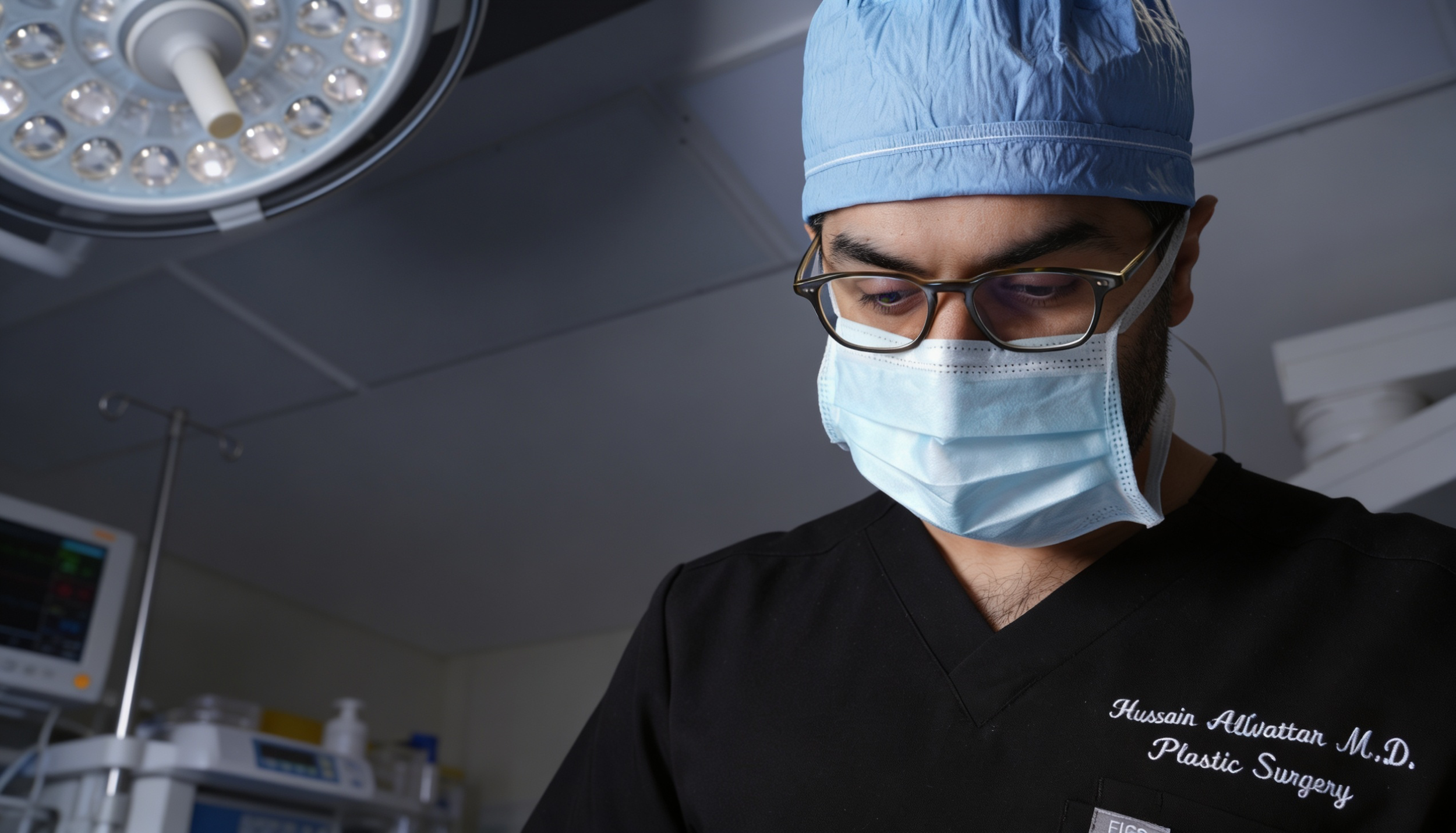
Dr. Husain treats it by combining liposuction with direct removal of the gland, through a small incision hidden at the lower border of the areola, where it heals to a barely visible line. The liposuction refines the fat and contours the chest, while the gland is removed through the same discreet incision.
Where it would sharpen the result, the liposuction can be extended to the surrounding chest and abdomen in the same session, for a more athletic, defined contour.
A flatter chest, through a small, hidden incision
Is gynecomastia surgery right for you?
Gynecomastia surgery may be right for you if:
• You have fullness or puffiness around the nipple
• Your chest looks soft or full despite regular exercise
• You feel self conscious at the beach, the pool, or the gym
• Certain clothes or fitted shirts feel uncomfortable
• You are in good general health
Gynecomastia can be genetic, hormonal, related to weight, or linked to certain medications or supplements, including anabolic steroids. The condition is common at all ages, and the surgery is performed on men of all ages. Dr. Husain will examine you and confirm the right approach at your consultation.
A tailored approach, from a simple correction to a full chest lift
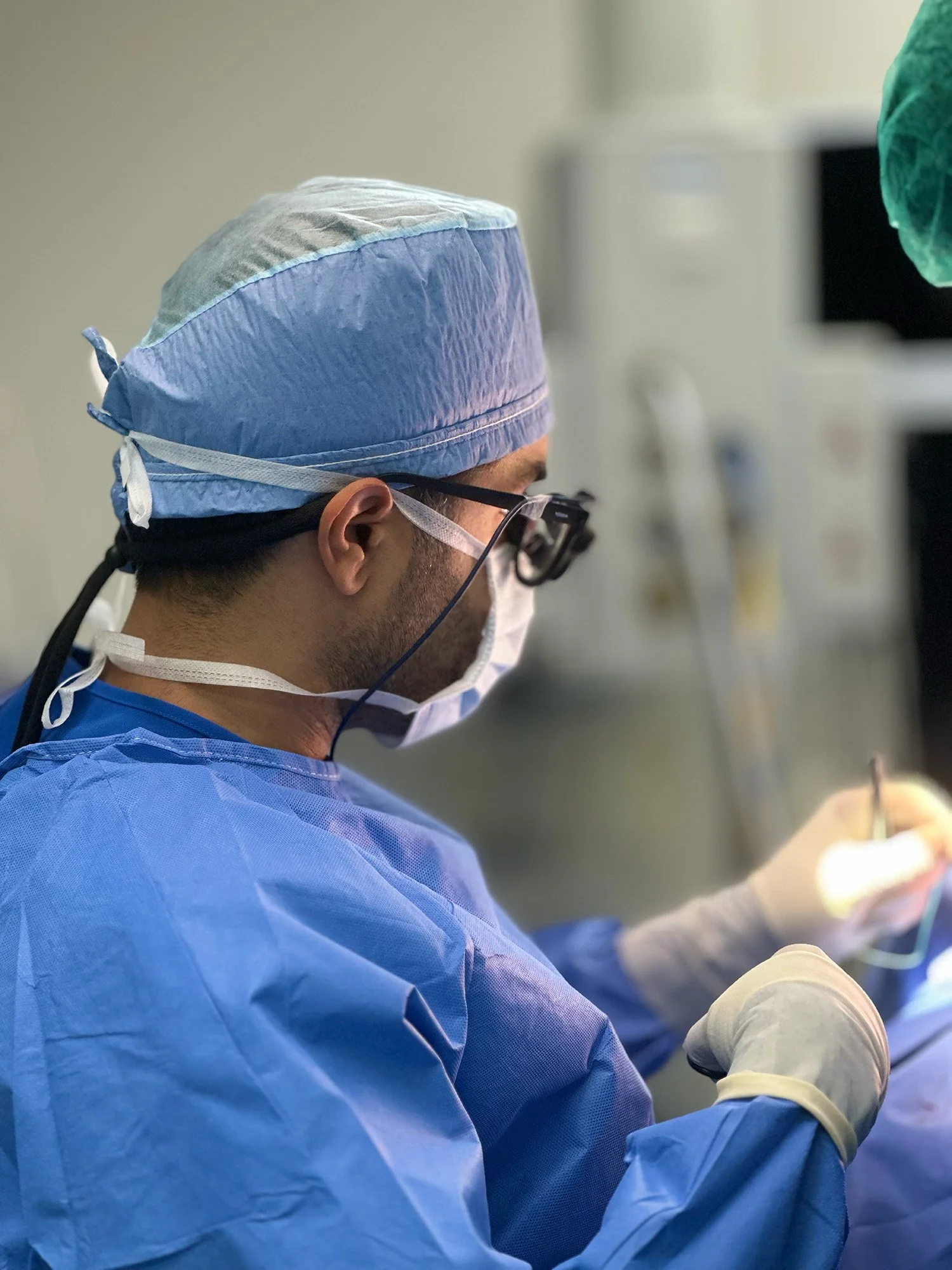
For most men, gynecomastia is corrected through the small, hidden incision at the areola, combining liposuction and gland removal as a day case. Dr. Husain’s approach is known for a rapid recovery, with most men back to cardio at the gym within three weeks and full weight training by four weeks.
Where there is mild loose skin, this can be tightened at the same time, either with radiofrequency or a small lift around the areola, to keep the result crisp.
For men with significant loose skin, most often after major weight loss, a formal male chest lift removes the excess skin to create a flat, masculine chest. This involves a longer incision, usually sitting in the natural chest fold and extending to the side depending on the amount of skin removed, and the nipple is carefully repositioned.
Dr. Husain will explain exactly what your case involves, and where any scars will sit, honestly and in detail, at your consultation.
Every procedure is performed in its entirety by Dr. Husain, in a fully accredited operating room with a board-certified anaesthesiologist.
A rapid, straightforward recovery
Recovery is one of the most reassuring parts of this procedure. Most men return to desk work within five to seven days, to light cardio at around three weeks, and to full weight training and heavy lifting by four weeks. A supportive compression garment is worn to help the chest settle smoothly against its new contour.
Chest lift patients follow a slightly longer timeline, as more healing is involved. You will be seen by Dr. Husain at every follow up, with detailed recovery guidance, including garment use, provided in person.

Flat, masculine, and long lasting
The result is a flatter, firmer, more masculine chest that looks natural and holds over time. Because the gland is physically removed, it does not grow back, and the result is long lasting.
Maintaining a stable weight preserves the result, and it is important to avoid anabolic steroids and hormonal supplements, which can cause the remnant tissue to grow. Gynecomastia surgery has a very high satisfaction rate, and for many men the change in confidence is immediate and permanent.
-
Recovery is rapid with Dr. Husain’s approach. Most men return to light cardio at around three weeks and to full training and heavy lifting by four weeks. Desk work is usually possible within five to seven days.
-
Usually it is best to wait. Gynecomastia that appears during puberty resolves on its own in most cases, often within a year or two, so Dr. Husain generally recommends waiting until around the age of twenty one, once it is clear the condition is persistent. Rarely, for younger patients where surgery is appropriate, it is carried out with parental involvement and consent.
-
Yes, this is a safe, well-established procedure in experienced hands. It is performed by Dr. Husain in its entirety, in a fully accredited operating room with a board certified anaesthesiologist, usually under sedation. For most men it is a day case, and you go home the same day.
-
Very common. It affects up to half of men at some stage of life, and is one of the most common conditions of the male chest. Most men simply never talk about it. It is nothing to feel awkward about, and it is very treatable.
-
No. The gland is physically removed, so it does not grow back, and the result is long-lasting. Maintaining a stable weight preserves the result. It is important to avoid anabolic steroids and hormonal supplements, as these can cause chest tissue to grow.
-
For most men, the only incision is a small one hidden at the lower border of the areola, which heals to a barely visible line. Where a chest lift is needed for significant loose skin, the incisions are longer, placed to sit as discreetly as possible, and supported by a dedicated scar care protocol. Dr. Husain will explain exactly what your case involves at your consultation.
Frequently Asked Questions
Begin your journey with Dr. Husain
If you are considering gynecomastia surgery and would like to speak with Dr. Husain, the first step is a consultation. This is an opportunity to ask questions, understand your options, and decide, in your own time, what is right for you.